Making a Better NOP-based Flexible Foam

Title: Additives For Improving Natural Oil Based Polyurethane Foam Peformance

 Number/Link: US2013/0065978

Applicant/Assignee: Air Products

Publication date: 14-03-2013

Gist”: Incorporating a small amount of cyanoguanidine into a NOP-based flexible foam improves airflow and humid ageing.

Why it is interesting: Now that natural oil polyols (NOPs) are becoming mainstream in flexible polyurethane foams (at least in the patent literature), it is to be expected that specific catalysts, surfactants and other additives will be developed for these systems.  Air Products claims to improve air flow and humid ageing properties of NOP-based foams by adding small amounts ( about 0.05 parts per 100 polyol) of solutions (in e.g. DMSO) of guanidine or its derivatives like cyanoguanidine or guanidinehydrochloride salt  to the formulation.  While it is not immediatly clear why this should work, the effect seems to be real.
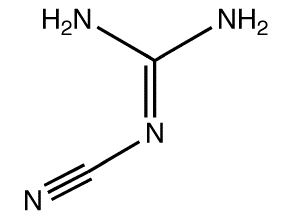
2-cyanoguanidine
2-cyanoguanidine

Even more non-isocyanate polyurethanes – this time from Dow!

Title: CYCLIC CARBONATE MONOMERS AND POLYMERS PREPARED THEREFROM

 Number/Link: WO2013028292

Applicant/Assignee: Dow

Publication date: 28-02-2013

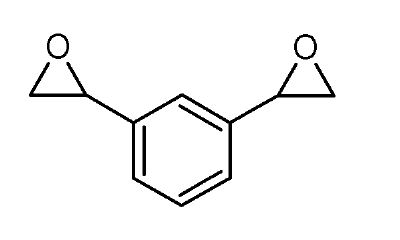
Gist”: Preparation of  divinylbenzene dicyclic carbonate and its reaction with triethylenetriamine and blowing agent to make poly(hydroxyurethane) foams.

Why it is interesting: There seems to be a growing interest in non-isocyanate production of (hydroxy) polyurethanes based on cyclic carbonates and amines  (see also my earlier posts on the subject). This may well be due to an increasing pressure upon system producers to reduce the concentration of free monomeric isocyanates in applications such as spray foams, one component froth foams and coatings. Because the cyclic carbonates – in contrast to isocyanates- are not water-reactive they can also be used to produce water-based coatings e.g.
Dow claims to have improved upon the existing art with new cyclic carbonate monomers, which are liquid and more reactive than prior art monomers.  The new monomers are prepared form divinylarene dioxides and CO2.

a divinylbenzenedioxide whcih can be turned into the dicyclocarbonate using CO2

a divinylbenzenedioxide which can be turned into the dicyclocarbonate using CO2

More Isocyanate-Free Polyurethanes

Title: FUNCTIONAL POLYURETHANE PREPOLYMER, METHOD OF PREPARING POLYURETHANE BY USING THE SAME, AND APPLICATION METHOD THEREOF

 Number/Link: US2013004677

Applicant/Assignee: AMKANG UNIVERSITY (TAIWAN)

Publication date: 3-01-2013

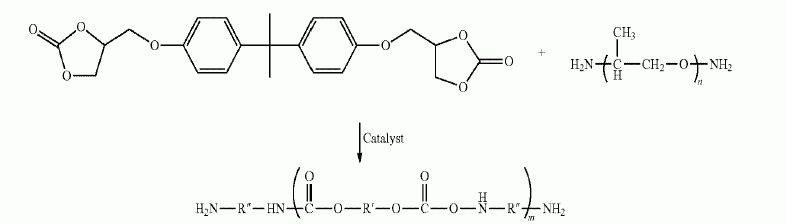
“Gist”: Bis(cyclic carbonate) compounds are produced by reacting  bisphenol-A diglycidylether with CO2.  These are then reacted with diamine oligomers (EO-PO and/or PDMS) to produce amine ended β-hydroxy-PU prepolymers which in turn are capped with acrylates to make a UV curable system useful for coating fabrics.

Why it is interesting: The materials are produced without “toxic” isocyanates and “harmful” phosgene (sic), but still need “harmful” amines and solvents. If made solvent-free, however, systems like this could make a lot of sense in e.g. synthetic leather production (IMHO).

isofreePU

Isocyanate-free PU from BPA-based cyclic carbonates and amines

  • Pages

  • Categories

  • Enter your email address to follow this blog and receive notifications of new posts by email.

    Join 259 other subscribers
  • Follow Innovation in PU on Twitter