Smell-free flexible polyurethane foams at last?

Title: METHOD FOR PRODUCING A MOLDED FOAM ELEMENT

 Number/Link: WO2012135888

Applicant/Assignee: EUROFOAM GMBH

Publication date: 11-10-2012

Gist”: Use of cyclic oligosaccharides to reduce smell in PU flex foam
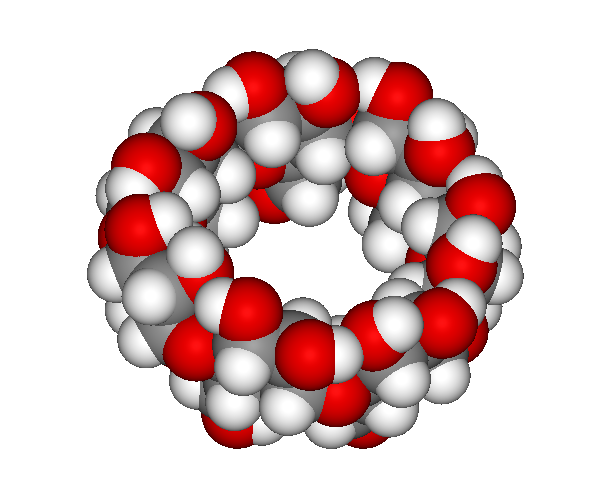
Beta-cylodextrin (Wikipedia)

Why it is interesting: Because they are often used in confined spaces like living rooms, bedrooms and cars, smells and and ‘volatile organic compounds’ (VOC)  in general have always been a problem with flexible PU foams. During the last decade, awareness of the health risks of VOC has grown among comsumers and producers alike  and emmision specifications have been adapted.  Advances have been made in reducing VOC  using reactive amine catalysts for example, but other volatiles, like certain aldehydes, can still pose  problems.  The VOC-reducing additives used in this case are cyclodextrines: a class of cyclic oligosaccharides which have a cavity that can trap small molecules.  A certain type of modified cyclodextrin is used as the main component of the air refreshner  FEBREZE (TM) – which has been proven to work very well.
Electricity from sea waves using thermoplastic polyurethane

Title: Use of thermoplastic polyurethanes for converting mechanical energy to electrical energy

Number: EP2509127  and EP2509126

Publication date: 10-10-2012

Applicant/Assignee: Bayer MS

Gist: Use of TPU as an electroactive polymer which is periodically streched and relaxed to produce electricity

Why it is interesting: Bayer claim to use a TPU with a conventional composition -but with a correct hardblock content and morphology- as a dielectric electroactive polymer. Covered with electrodes, electrical charge will appear on both sides of a TPU strip when streched, the charge will flow and result in an electrical current when the polymer is relaxed. The TPU needs the correct stiffness, dielectric constant and electrical breakdown porperties. Both wave- and wind energy harvesting are claimed.

Building with PU instead of cement.

Title: Masonry Construction using Single-Component Polyurethane Foam and Foam-Core Blocks

 Number: US2012247061

Publication date: 4-10-2012

Applicant/Assignee: CALMAR HOLDINGS LLC

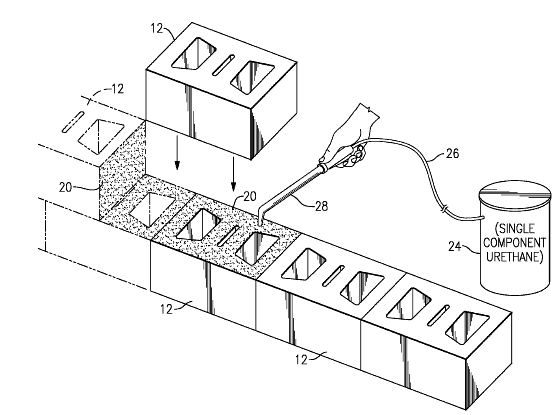
Gist: Mortar-free masonry wall construction using (off the shelf) one component PU rigid foam.

Why it is interesting: Apparantly using PU instead of Portland cement-based mortar results in walls with a higher tensile strength.  This is useful during construction (when walls can be easily blown over by wind) or for prefab systems where wall elements have to be lifted and transported. The idea is not new.  The only major difference with the prior art being that this case claims one component moisture curing systems. Prior art US20050096411 was not granted and was continued in US20110016814.      

  • Pages

  • Categories

  • Enter your email address to follow this blog and receive notifications of new posts by email.

    Join 259 other subscribers
  • Follow Innovation in PU on Twitter