Making a Better NOP-based Flexible Foam

Title: Additives For Improving Natural Oil Based Polyurethane Foam Peformance

 Number/Link: US2013/0065978

Applicant/Assignee: Air Products

Publication date: 14-03-2013

Gist”: Incorporating a small amount of cyanoguanidine into a NOP-based flexible foam improves airflow and humid ageing.

Why it is interesting: Now that natural oil polyols (NOPs) are becoming mainstream in flexible polyurethane foams (at least in the patent literature), it is to be expected that specific catalysts, surfactants and other additives will be developed for these systems.  Air Products claims to improve air flow and humid ageing properties of NOP-based foams by adding small amounts ( about 0.05 parts per 100 polyol) of solutions (in e.g. DMSO) of guanidine or its derivatives like cyanoguanidine or guanidinehydrochloride salt  to the formulation.  While it is not immediatly clear why this should work, the effect seems to be real.
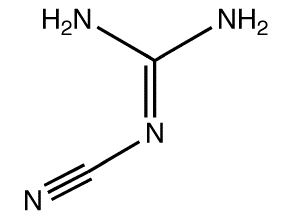
2-cyanoguanidine

2-cyanoguanidine

Rigid Polyurethane Foam from Modified Polymer Polyols

Title: METHOD FOR PRODUCING RIGID POLYURETHANE FOAMS

 Number/Link: WO2013/024101  (German)

Applicant/Assignee: BASF

Publication date: 21-02-2013

Gist”: Polymer polyols comprising surface-active and reactive SAN particles for improved rigid foams.

Why it is interesting: In this invention polymer polyols are prepared by in-situ co-polymerisation of styrene, acrylonitrile (preferred) and a polyether siloxane surfactant comprising at least one  unsaturated group and at least one hydroxyl group. This will result in a polymer polyol (or “graft polyol”) comprising surface-modified particles, which, when used to prepare rigid foams, will end up predominantly (>50%) in the cell walls rather than in the cell struts. This is new and surprising. The rigid foams should show improved insulation properties and compressive strength.

surface active monomer used in the invention

surface active monomer used in the invention

Isotactic Polyether Polyols

Title: POLYETHERS, METHODS OF MAKING SAME, AND USES THEREOF

 Number/Link: WO2012166889

Applicant/Assignee: Cornell University

Publication date: 6-12-2012

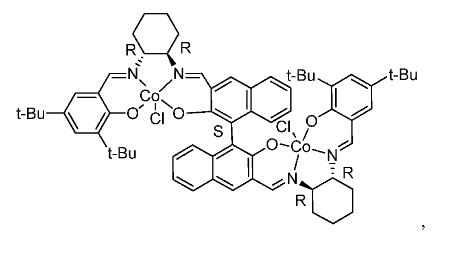
Gist”: Isoctactic polypropyleneoxide monols or diols produced by reacting a racemic mixture of propylene oxide  together with a monol or diol ‘starter’ (chain transfer agent) and a specific bimetallic-complex catalyst and an ionic co-catalyst.

Why it is interesting: Isotactic polyols would probably be highly crystalline and polyurethanes produced with them  would therefore show radically different properties compared to conventional a-tactic polyols. Could be very useful in certain types of TPU, coatings, adhesives and maybe rigid foams (gas permeability).

catalyst ex

Example of catalyst used in the invention.

  • Pages

  • Categories

  • Enter your email address to follow this blog and receive notifications of new posts by email.

    Join 259 other subscribers
  • Follow Innovation in PU on Twitter