Reactive TPU for AM

Patent Title: REACTIVE THERMOPLASTIC POLYURETHANE BASED ON BLOCKED ISOCYANATES

 Number/Link: WO2018/149977

Applicant/Assignee:  BASF

Publication date: 23 August 2018

Gist”: Low molecular weight TPU with blocked isocyanate groups is useful for 3D printing

Why it is interesting: The invention is related to relatively low MW ( up to 40,000Da) thermoplastic polyurethanes with thermolabile end groups and a melting point of about 100ºC (pref).  The TPU has a low melt viscosity and after de-blocking (at pref. about 150ºC) the isocyanate groups can react with chain extender present, resulting in increased MW and related properties. The TPU can be prepared by partially blocking diisocyanates (with e.g. caprolactam) and then reacting in one shot or prepolymer system with polyols and chain extenders. In powder form the TPUs are said to be useful in additive manufacturing (AM) processes.
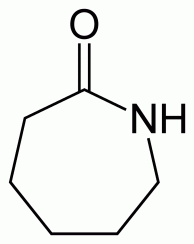
caprolactam

Caprolactam

Flexible Foams with Reduced Aldehyde Emissions

Patent Title: POLYURETHANE FOAMS HAVING LOW LEVELS OF ALDEHYDE EMISSIONS

 Number/Link: WO2018/145283

Applicant/Assignee:   Dow

Publication date: 16 August 2018

Gist”: Cyclic 1,3-diketones are used as aldehyde scavengers

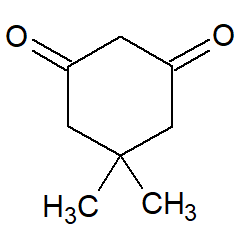
Why it is interesting: Aldehyde emissions from flexible polyurethane foams (and many other materials) remain an issue and have been discussed a number of times before in this blog.  The current invention is about the use of cyclic 1,3-diketones as scavengers for both fomaldehyde and acetaldehyde in flexible foam formulations.  Diketones like (e.g.) 5-phenylcyclohexane-1,3-dione, 5,5-dimethylcyclohexane-1,3-dione and 1H-indene-1,3(2H)-dione are blended with the polyol component and react with the aldehydes during foam cure.

DMCHD

5,5-dimethylcyclohexane-1,3-dione

Bioabsorbable Thermoplastic Polyurethane

Patent Title: BIODEGRADABLE AND/OR BIOABSORBABLE THERMOPLASTIC POLYURETHANES

 Number/Link: WO2018/140912

Applicant/Assignee:  Lubrizol

Publication date: 2 august 2018

Gist”: TPU breaks down into non-toxic components

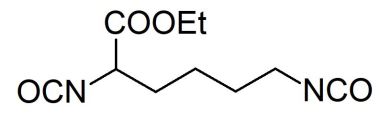
Why it is interesting: The invention is related to biodegradable TPU for medical use in vivo. The TPU is prepared from isocyanates, polyols and chain extenders that biodegrade into non-toxic products, e.g. hexane diisocyanate, butanediisocyanate, lysine diisocyanate, poly(ε-caprolactone), polyglycolide, dipropylene glycol, diethyleneglycol etc.  The TPUs are prepared at a hardblock content of 15-45% (pref).
I strongly doubt that this case is patentable because the same compositions are disclosed inanother Lubrizol application discussed before in this blog.

LDI

Lysine diisocyanate

  • Pages

  • Categories

  • Enter your email address to follow this blog and receive notifications of new posts by email.

    Join 259 other subscribers