Open Microcellular Rigid Foams

Patent Title: POLYURETHANE FOAM AND PROCESS FOR PRODUCING SAME

 Number/Link: WO 2018/162372 (German)

Applicant/Assignee:  Covestro

Publication date: 13 September 2018

Gist”: Rigid foam formulation is blown with supercritical carbondioxide

Why it is interesting: Open-celled rigid polyurethane foams are well known and used in vacuum insulation panels. Theoretically the best thermal insulation is obtained with the smallest cell size. According to this invention microcellular rigid foams with a homogeneous cell structure, more than 90% open cells and an average cell diameter of less than 50μm can be prepared by using a rigid foam formulation containing a cellopener and supercritical carbondioxide and allowing it to react and expand in a closed mould. In an example a rigid foam is produced with a density of 67kg/m³, open cell content of 95% and average cell diameter of 17μm.

CO2_phase_diagram

Carbon dioxide (P,T) phase diagram (Wikipedia)


Novel i-PEEP Polymers

Patent Title:  ISOCYANATE-MODIFIED POLYESTER-EPOXIDE POLYMER COMPOSITIONS

 Number/Link: WO2018/160217

Applicant/Assignee:  Stepan

Publication date: 7 September 2018

“Gist”: Polyester polyols are reacted with isocyanates and polyepoxies

Why it is interesting: The invention is related to isocyanate-modified polyester-epoxy polymers (i-PEEPs) which are said to be a “new class of polymers” useful as adhesives, coatings and elastomers.  The materials are prepared by reacting polyester polyols with both polyisocyanates and polyepoxies at an “i-PEEP index” (=(eqvs iso + eqvs epoxy)/eqvs polyol in %) of 100 to 200. The reaction can be run catalysed at room temperature or optionally un-catalyzed at 40 to 100°C. In the examples aromatic and aliphatic polyester polyols are reacted with polymeric MDI and BPA-DGE – based polyepoxide at different indices to produce elastomers with shore A hardness ranging between 30 and 95.
Interesting materials, although calling them a new class of polymers may be a bit exaggerated.

Bisphenol_A_diglycidyl_ether_200

Bisphenol-A diglycidylether (BPA-DGE)


Trimerized Pentamethylenediisocyanate

Patent Title: METHOD FOR MODIFYING AT LEAST PENTAMETHYLENE DIISOCYANATE BY MEANS OF SPIROCYCLIC AMMONIUM SALTS AS CATALYST

 Number/Link:WO2018/153801 (German)

Applicant/Assignee:  Covestro

Publication date: 30 August 2018

Gist”: PDI is trimerized using a spirocyclic ammonium salt

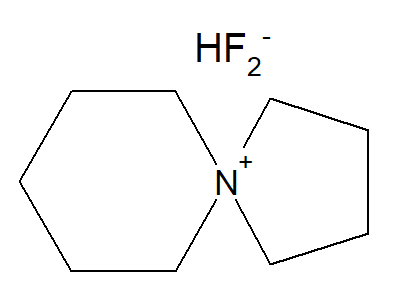
Why it is interesting: The oligomerization of diisocyanates by trimerization or dimerization is well known.  Diisocyanates are partially trimerized using a catalyst which is “killed” when the desired conversion is reached. The remaining monomer is then removed. In this invention pentamethylenediisocyanate is trimerized using a spirocyclic ammonium salt as catalyst, which apparently results in a desirable amount of asymmetric trimer (i.e. iminooxadiazinedione groups) as opposed to symmetric trimer (isocyanurate groups).  In the examples 5-azo-spiro[4,5]decane hydrogendifluoride is used as catalyst.

spiro catalyst

Spirocyclic ammonium salt used as catalyst in the invention

  • Pages

  • Categories

  • Enter your email address to follow this blog and receive notifications of new posts by email.

    Join 259 other subscribers