Even more non-isocyanate polyurethanes – this time from Dow!

Title: CYCLIC CARBONATE MONOMERS AND POLYMERS PREPARED THEREFROM

 Number/Link: WO2013028292

Applicant/Assignee: Dow

Publication date: 28-02-2013

Gist”: Preparation of  divinylbenzene dicyclic carbonate and its reaction with triethylenetriamine and blowing agent to make poly(hydroxyurethane) foams.

Why it is interesting: There seems to be a growing interest in non-isocyanate production of (hydroxy) polyurethanes based on cyclic carbonates and amines  (see also my earlier posts on the subject). This may well be due to an increasing pressure upon system producers to reduce the concentration of free monomeric isocyanates in applications such as spray foams, one component froth foams and coatings. Because the cyclic carbonates – in contrast to isocyanates- are not water-reactive they can also be used to produce water-based coatings e.g.
Dow claims to have improved upon the existing art with new cyclic carbonate monomers, which are liquid and more reactive than prior art monomers.  The new monomers are prepared form divinylarene dioxides and CO2.
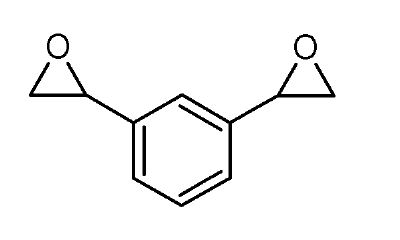
a divinylbenzenedioxide whcih can be turned into the dicyclocarbonate using CO2

a divinylbenzenedioxide which can be turned into the dicyclocarbonate using CO2

Rigid Polyurethane Foam from Modified Polymer Polyols

Title: METHOD FOR PRODUCING RIGID POLYURETHANE FOAMS

 Number/Link: WO2013/024101  (German)

Applicant/Assignee: BASF

Publication date: 21-02-2013

Gist”: Polymer polyols comprising surface-active and reactive SAN particles for improved rigid foams.

Why it is interesting: In this invention polymer polyols are prepared by in-situ co-polymerisation of styrene, acrylonitrile (preferred) and a polyether siloxane surfactant comprising at least one  unsaturated group and at least one hydroxyl group. This will result in a polymer polyol (or “graft polyol”) comprising surface-modified particles, which, when used to prepare rigid foams, will end up predominantly (>50%) in the cell walls rather than in the cell struts. This is new and surprising. The rigid foams should show improved insulation properties and compressive strength.

surface active monomer used in the invention

surface active monomer used in the invention

Composite Polyurethane-Polystyrene Thermal Insulation Foams

Title:  METHOD FOR PRODUCTION OF HEAT INSULATING COMPOSITE MATERIALS AND HEAT INSULATING COMPOSITEMATERIAL PRODUCED THEREBY

 Number/Link: WO2013/021324

Applicant/Assignee: HIT KONSULTING

Publication date: 14-02-2013

Gist”: Expandable polystyrene beads are added to rigid PUR or PIR foam system.

Why it is interesting: EPS beads with a softening temperature of 80-90°C are added to the isocyanate stream in an amount of 15-60% w/w to the total system. The exotherm has to be exactly right to fully expand and not degrade the EPS, and is controlled by the ratio PU/EPS.  This idea is not new, but it remains an interesting route to cheap insulation. The claim is relatively narrow so could get granted imo.

Expandable Polystyrene (Wikimedia)

Expandable Polystyrene (Wikimedia)

  • Pages

  • Categories

  • Enter your email address to follow this blog and receive notifications of new posts by email.

    Join 259 other subscribers
  • Follow Innovation in PU on Twitter