Flexible Polyurethane Foams with Low VOC Emission

Title: Reducing Emissions in Polyurethane Foam

 Number/Link: US2013137787

Applicant/Assignee: Air Products

Publication date: 30-50-2013 (priority PCT/US)

Gist”: Use of reactive amine catalysts without primary hydroxyl groups, together with diacids results in flexible foams with good compression set and low emissions.

Why it is interesting: Reduction of VOC emissions is an important driver in the flexible foam industry and volatile amine catalysts are among the most commonly used additives that need to be removed. Current practice is to use isocyanate-reactive catalysts, sometimes combined with acids to get a ‘delayed-action’ effect which is useful to fill complex moulds. Isocyanate-reactive catalysts act as chain stoppers hoewever and can result in loss of properties, especially fatigue properties like compression set, and the acids used can contribute to the VOC emissions. According to this invention flexible foams with low emissions and with good compression set properties can be made by using a tert-amine catalyst comprising a reactive group which is chosen from amine, amide, urea or sec-hydroxyl ( so no primary hydroxyl) together with a di-acid like maleic-, succinic-, azaleic-, sebacic acid etc. To me it is not immediatly clear why this should work and no mechanism or explanation is given in the application.

DMAPA - a reactive catalysts according to the invention

DMAPA – a reactive catalysts according to the invention
Polyurethane OCF Systems with Low Monomeric Isocyanate Content

Title: IMPROVED POLYURETHANE FOAM COMPOSITION

 Number/Link: WO2013/072380

Applicant/Assignee: SOUDAL

Publication date: 23-05-2013

Gist”: Use of mono-alcohols to reduce monomeric isocyanate content in OCF systems.

Why it is interesting: OCF , or one component foam (or froth) systems are isocyanate ended prepolymers, mixed with organic blowing agents and other additives like catalysts. They are often prepared directly into pressure cans and are mostly used in construction as adhesives and sealants.  Curing happens by reaction with ambient moisture. Recent changes in legislation has forced OCF producers to drop the amount of free monomeric isocyanate in their systems.  In this invention OCF systems with less than 1% free monomeric MDI are produced by reacting a conventional diol, a polymeric/monomeric MDI mixture and a relatively low MW monol (2-ethyl-hexanol in the examples).  The monol allows to produce prepolymers with low NCO content and low free MDI by preventing chain extension and therefore avoiding extreme viscosity build-up.

OCF system in pressure can.

OCF system in pressure can.

Hybrid PU-PF Rigid Foams

Title: RIGID POLYURETHANE FOAM

 Number/Link: EP2591034A1

Applicant/Assignee: BASF

Publication date: 15-05-2013  (priority PCT/EP)

Gist”: Use of novolac polyols in rigid (spray) foams to improve reactivity and flammability properties.

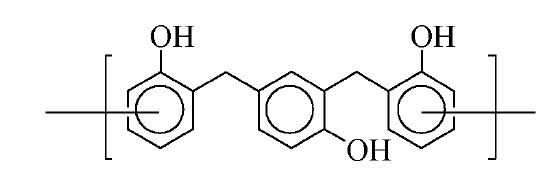
Why it is interesting: ‘Novolacs’ are phenol-formaldehyde (PF) resins which are produced at a p:f ratio of  >1 (as opposed to ‘resols’ where this ratio is <1) Novolacs are therefore phenol (OH) ended and can be used together with isocyanates to prepare hybrid polyurethanes. In this case novolacs with a functionality of about 4-8 are used together with conventional rigid foam polyol(s) in which the novolacs are dissolved (after heating and opt. melting) in an amount of about 40%. Together with polymeric MDI, water and conventional additives rigid (spray) foams are produced with improved flammibility, smoke, scorching and reactivity properties.

Novolac resin

Novolac resin

  • Pages

  • Categories

  • Enter your email address to follow this blog and receive notifications of new posts by email.

    Join 259 other subscribers