Polyurethane Memory Foam with Improved Thermal Comfort

Title: COMPOSITE MEMORY FOAM AND USES THEREOF

 Number/Link: US2012316254

Applicant/Assignee: ZEDBED INTERNAT INC

Publication date: 13-12-2012

Gist”: Polyurethane memory foam containing polyurethane elastomer particles for improved thermal comfort.

Why it is interesting:  Soy-oil polyols are used to produce both the foam matrix (about 15%) and the PU elastomer (up to 90%).  The particles are about 1mm in size and used in different amounts according to foam density/stiffeness: 2.5% for “pillow grade” and 15% for “mattress grade”. The particles are claimed to improve heat conductivity and therefore comfort.

mattress

Flexible Polyurethane Foams containing Gel Particles: an Alternative to “Memory Foams”?

Title: COMPOSITE MATERIAL FOR MAKING ARTICLES OUT OF POLYURETHANE DOPED WITH POLYMERIC GEL AND THE PROCEDURE FOR MAKING IT

 Number/Link: WO2012160515

Applicant/Assignee: NEW WIND S.R.L.

Publication date: 29-11-2012

Gist”: Viscoelastic foams produced by dispersing (silicon?) gel particles into the polyol stream.

Why it is interesting: Viscoelastic or “memory foams” are popular in the bedding industry. This case claims to improve upon the current technology by incorporating into the foam matrix 5 to 20% of ‘gel particles’ with a size of 1 to 5mm.  Advantages over curent memory foams mentioned are a lower glass transition temperature and a cool or “fresh” feel to the touch.  The ‘polymeric gels’ are however ill defined in the text and according to claim 6 “said silicone gel is a SEBS rubber”(?).  While being an interesting idea the case has little chance of being granted according to the examiners report. MemoryFoam

High Resilience Flexible Polyurethane Foams containing Castor Oil

Title: Highly elastic polyurethane foams containing castor oil

 Number/Link: EP2527381

Applicant/Assignee: BASF

Publication date: 28-11-2012

Gist”: Flexible foam with more than 50% ball rebound based on MDI, partly prepolymerized conventional EO/PO polyol and about 15% castor oil.

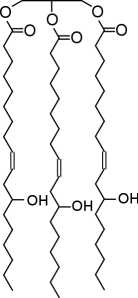
Why it is interesting: Castor oil was one of the first renewable raw materials used in PU because it contains hydroxyl groups and can therefore be used ‘as such’.  Use of (unmodified) castor oil in PU will however result in an increased glass transition temperature and therefore in low resilient materials. It has therefore been patented before in low resilient “memory foam” compositions.  BASF now claim foams with >50% resilience but only 15% castor oil is used in the examples. The actual ‘trick’ is prepolymerizing part of conventional polyol which does indeed seem to increase resilience with a few percent,  probably due to some subtle phase effect.

Castor_oil

Major Component of Castor Oil (Wikipedia)

  • Pages

  • Categories

  • Enter your email address to follow this blog and receive notifications of new posts by email.

    Join 259 other subscribers
  • Follow Innovation in PU on Twitter